
Caring for snorkelling gear after salt water

Caring for snorkelling gear after salt water
Snorkelling kit does not usually wear out. It degrades — silicone hardens, straps perish, buckles crack — and almost all of that is caused by salt left to dry and by ultraviolet light. Ten minutes after each swim prevents nearly all of it.
Rinse properly, not quickly
Salt crystallises as it dries and works its way into every hinge and seal. Rinse the whole set in fresh water, and run water through the snorkel barrel and purge valve rather than just over the outside. A bucket of clean water and a two-minute soak beats a quick pass under a tap.
Pay attention to the mask buckles, where salt seizes the swivel, and the fin foot pockets, where sand collects and abrades.
Dry in shade, always
Ultraviolet light is what turns a soft silicone skirt hard and yellow. Drying gear on a sunny wall is the single most damaging habit in snorkelling. Shade with a little air movement dries just as fast and costs the kit nothing.
The inside of a hot car is worse still. Heat distorts skirts and foot pockets permanently, and a distorted skirt will never seal properly again.
Storing the mask
Put the mask back in its box with the strap loose and nothing resting on the skirt. A skirt compressed for months takes a set and leaks along the deformation. If the box has gone, any rigid container is better than the bottom of a bag.
Keep the lens facing up so the skirt is not bearing the weight of the mask itself.
Snorkels and purge valves
Dry-top mechanisms and purge valves are the parts most likely to fail, and both fail from salt and grit rather than from use. Flush them, then work the mechanism a few times under fresh water so anything trapped comes out.
Store the snorkel straight rather than coiled. The tube takes a permanent bend surprisingly easily.
Fins
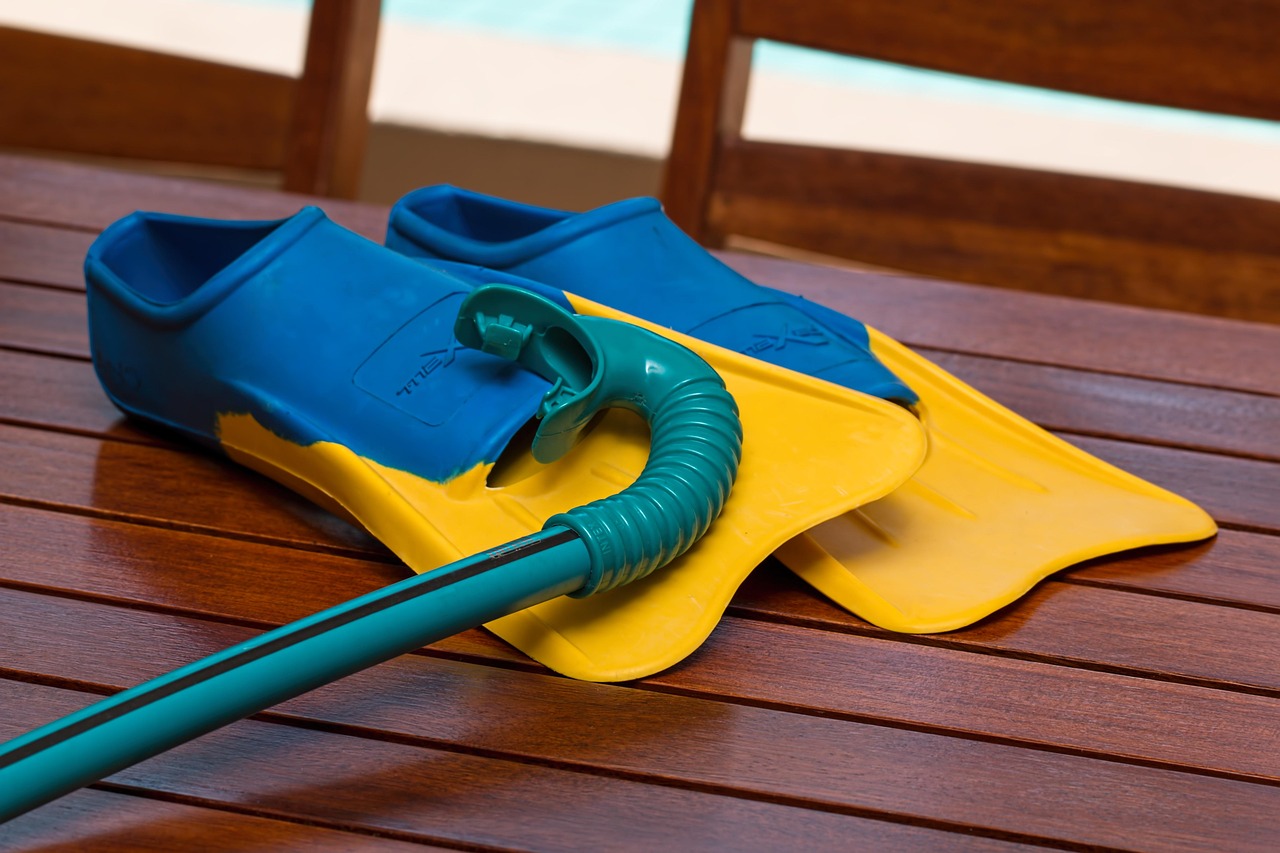
Rinse the foot pocket inside and out, then dry flat. Fins stored standing on their tips bend, and a bent blade pushes water unevenly for the rest of its life. If they must be hung, hang them from the foot pocket, not the blade.
Open-heel straps are the consumable part. Inspect them at the start of the season and replace at the first sign of surface cracking, which is much cheaper than losing a fin mid-swim.
Silicone grease, sparingly
A small amount of silicone grease on mask buckles and on the skirt edge keeps both supple. Use silicone, never petroleum-based grease, which attacks the rubber it is meant to protect.
Wipe the excess. Grease on the sealing edge attracts sand, and sand under a skirt is a guaranteed leak.
Between seasons
Before the kit goes away for months, wash everything with fresh water and a little mild soap, dry it completely, and store it somewhere dark and at room temperature. Not a hot loft, not a damp basement.
Leave the mask box unlatched or slightly open so any residual moisture escapes rather than sitting against the lens.
What to check before the first swim of the year
Straps for cracking, buckles for stiffness, skirt for hardness, lens for scratches, snorkel valve for free movement, fin pockets for splits. Five minutes on the kitchen table beats finding out at the beach. Replacement straps, buckles and anti-fog are all on the shop page, and the counter can advise on what is worth repairing and what is not.
Packing gear for a flight
Most damage to snorkelling kit happens in a suitcase rather than in the sea. A mask under a fin is a cracked skirt; a snorkel loose in a bag is a bent tube; a fin blade under a heavy case is a permanent set that never quite comes out.
Pack the mask in its own hard box, in the middle of the case surrounded by clothing. Lay fins flat along the base of the case rather than standing them on edge, and slide the snorkel down the side rather than coiling it. If the kit is coming back damp, put it in a mesh bag rather than a sealed one so it is not shut in for a day.
A rinse routine that survives a holiday
On a trip the rinse rarely happens properly, because there is no bucket and no obvious place to hang anything. A collapsible bucket and a length of light cord solve both, take almost no room, and turn the daily rinse into a two-minute job rather than something you mean to do later.
Where even that is not practical, the shower at the end of the day is enough: take the kit in with you, run fresh water through the snorkel and over the mask, and hang it over the rail. Salt removed the same day never gets the chance to crystallise, which is the whole point of the routine.
The short version
- Rinse in fresh water every time, including inside the snorkel barrel.
- Dry in shade — sun is the main enemy of silicone.
- Store the mask in its box with nothing pressing on the skirt.
- Check straps and buckles at the start of each season, not the end.
From our shelves
- STREAM 2 SEA Reef Safe Anti-Fog Spray for Swim Goggles, Snorkel, Scuba & Ski Masks – Defogger — $13.86
Where to go next
Browse the full range on the shop page, read the frequently asked questions before ordering, or check delivery timing on the Shipping Policy page. If you would rather ask a person, contact us — the phone reaches the counter.